Mold Removal in Escondido, CA
Escondido was incorporated in October 1888 and sits at about 646 feet in a valley ringed by hills, which is why its summer highs run near 100 degrees while Carlsbad, twenty minutes west, sits in the marine layer. About 151,000 people live here now, in housing that spans the whole twentieth century: early-1900s bungalows on raised floors south of Grand Avenue, 1950s to 1970s slab ranches across the flats, and stucco two-stories from the 1980s on climbing the hills to the north and east.
Escondido Creek runs through the middle of town in a concrete flood-control channel the city built in the 1960s, and the January 22 and February 1, 2024 storms showed how fast the valley fills when an atmospheric river stalls over it. Even so, most mold in an Escondido house traces to a slab line, a water heater, or an attic air handler rather than the creek.
When you call from Escondido, one independent local mold provider picks up the job from there. That provider reads the walls with a meter and lays out the scope in writing. Our part ends when the call connects.
Escondido mold removal from the bungalows to the hillside tracts
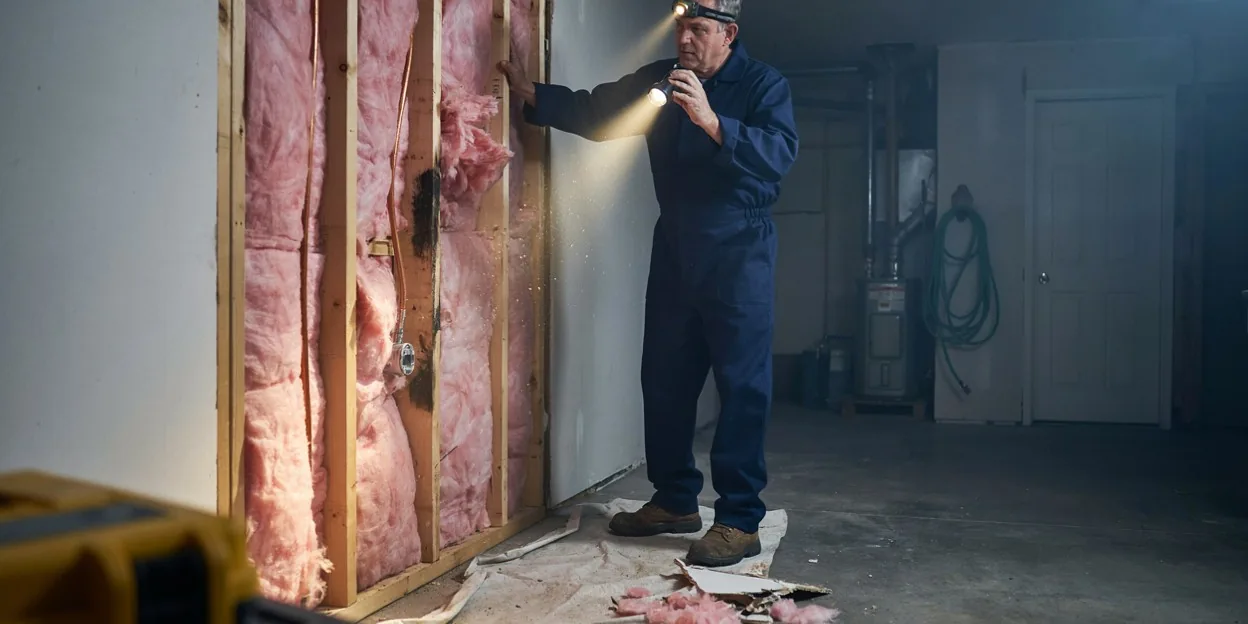
A soft baseboard beside a warm patch of tile in a 1960s ranch is mold removal, and the plumber who finds the slab line works alongside the crew. A ceiling stain under a tile roof after the 2024 storms is attic mold remediation. A dark patch under the attic air handler in a 1990s two-story is black mold removal, handled by moisture and extent rather than color.
Grape Day Park, the hospital on the hill, and who pulls the permit
The Escondido History Center keeps the town's story in Grape Day Park, a block from the creek channel, including the 1888 Santa Fe depot and a Victorian house moved there to save it. When a leak or a storm turns into an injury, Palomar Medical Center Escondido on Citracado Parkway is the trauma center for all of inland North County. Any rebuild after removal that touches plumbing or electrical goes through the city's Building Division, and the provider pulls that permit.
Call (760) 546-5839 and tell us what you see. An independent local mold provider serving Escondido takes it from there.
Services Available in Escondido
Mold Removal
Growth on drywall after a slab leak, a water heater, or a fridge line: room sealed, wet board cut to the meter mark, framing HEPA-cleaned and dried.
Black Mold Removal
A dark patch worked by how far the water went, not by its color: containment up, porous material out, hard surfaces cleaned, leak fixed before closing.
Whole-Home Mold Remediation
A slab leak or a storm that soaked several rooms at once, mapped wall by wall and cleared in zones as one job with one scope.
HVAC Mold Cleaning
Coil, drain pan, and condensate line cleaned or swapped when the attic or closet air handler sweats through a 100-degree Escondido summer.
Bathroom Mold Removal
Growth behind a vanity, under a shower pan, or on a ceiling with no fan, removed once the supply or drain leak feeding it is fixed.
Attic Mold Remediation
Growth on roof sheathing under cracked tile underlayment or beside a sweating duct, cleaned and treated after the roof or the duct is fixed.
Mold Odor Removal
A musty smell in a house that looks fine, traced to wet material under the laminate or behind a cabinet, then removed and treated.
Mold Damage Repair
Drywall, texture, baseboard, and cabinet bottoms put back after removal, once the slab reads dry and the leak is repaired.