Mold Removal in Old Escondido, CA
Old Escondido is the city's historic district, established in 1989 and covering about 900 homes between Fourth and Thirteenth Avenues, from Escondido Boulevard east to Chestnut Street. The houses run from the mid-1880s Victorians through 1920s Craftsman bungalows and 1930s Spanish cottages, and most of them sit on raised foundations over a crawl space with lath-and-plaster walls, original wood windows, and a bathroom that was added or moved sometime in the last hundred years.
That construction changes where mold hides. A drain or a galvanized supply line under a bathroom drips onto soil and joists in the crawl space, and the smell comes up through the floor long before a wall shows anything. Roofs that have been redone four times still sit on original decking, and the 2024 storms found the soft spots.
From Old Escondido, the call goes to an independent local provider who does mold removal and remediation. The provider's first visit is a meter reading and a written scope. Nothing beyond the connection is ours.
Old Escondido mold removal under raised floors and behind plaster
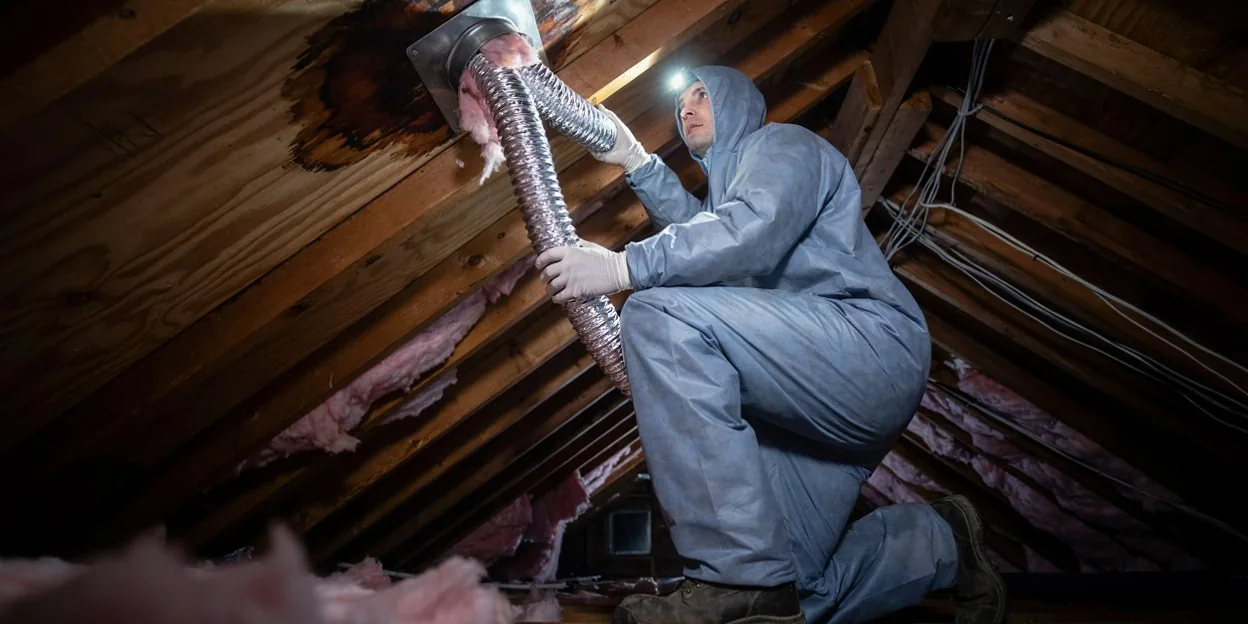
A musty smell with no stain in a bungalow is mold odor removal, and the crew opens the crawl space hatch first. A plaster wall wet from a galvanized line is mold removal, worked around lath rather than drywall. A ceiling stained under hundred-year-old decking after the January storm is attic mold remediation.
Design review for the outside, a city permit for the rest
Exterior changes in the district pass through the city's review for the Old Escondido Historic District, which does not reach an interior plaster repair but matters if the damage took siding, a porch, or a window with it. The building permit for plumbing or electrical in the rebuild is an ordinary City of Escondido permit, and the provider pulls it.
Call (760) 546-5839 and tell us what you see. We connect Old Escondido homeowners with a local mold provider in one call.
Services Available in Old Escondido
Mold Removal
Growth on drywall after a slab leak, a water heater, or a fridge line: room sealed, wet board cut to the meter mark, framing HEPA-cleaned and dried.
Black Mold Removal
A dark patch worked by how far the water went, not by its color: containment up, porous material out, hard surfaces cleaned, leak fixed before closing.
Whole-Home Mold Remediation
A slab leak or a storm that soaked several rooms at once, mapped wall by wall and cleared in zones as one job with one scope.
HVAC Mold Cleaning
Coil, drain pan, and condensate line cleaned or swapped when the attic or closet air handler sweats through a 100-degree Escondido summer.
Bathroom Mold Removal
Growth behind a vanity, under a shower pan, or on a ceiling with no fan, removed once the supply or drain leak feeding it is fixed.
Attic Mold Remediation
Growth on roof sheathing under cracked tile underlayment or beside a sweating duct, cleaned and treated after the roof or the duct is fixed.
Mold Odor Removal
A musty smell in a house that looks fine, traced to wet material under the laminate or behind a cabinet, then removed and treated.
Mold Damage Repair
Drywall, texture, baseboard, and cabinet bottoms put back after removal, once the slab reads dry and the leak is repaired.